Alright, let’s talk shop. You’re at a point where the little ten-cup brewer just isn’t cutting it anymore. The line is growing, the demand is real, and the thought to buy a commercial coffee maker has moved from a “maybe someday” daydream to a “we need this yesterday” reality. I get it. Stepping into the world of commercial equipment can feel like learning a new language, but that’s exactly why I’m here. Forget the confusing sales pitches and technical jargon. We’re going to break this down, friend to friend, so you can make a choice that powers your business, delights your customers, and doesn’t give you a headache.
Is It Time to Buy a Commercial Coffee Maker?
First things first, what’s the real difference between that fancy machine at your favorite home goods store and a true commercial unit? In a word: endurance. A home machine is built for a few cups a day; a commercial coffee maker is a workhorse engineered for relentless, back-to-back brewing, day in and day out.
Think of it like this: you wouldn’t use a family sedan to run a cross-country delivery service. It might work for a little while, but it wasn’t built for the job. When you buy a commercial coffee maker, you’re investing in:
- Volume & Speed: Serving dozens, or even hundreds, of people per day without breaking a sweat.
- Consistency: Every cup tastes as good as the last, which is crucial for repeat business.
- Durability: Built with robust materials like stainless steel to withstand the rigors of a busy environment.
- Certifications: Often NSF-certified, meaning they meet strict public health and safety standards—a must-have for many food service operations.
Understanding the Main Types of Commercial Coffee Makers
The commercial coffee world isn’t one-size-fits-all. The right machine for a bustling cafe is totally different from what a high-end office needs. Let’s explore the main players on the field.
Drip and Batch Brewers (The Workhorses)
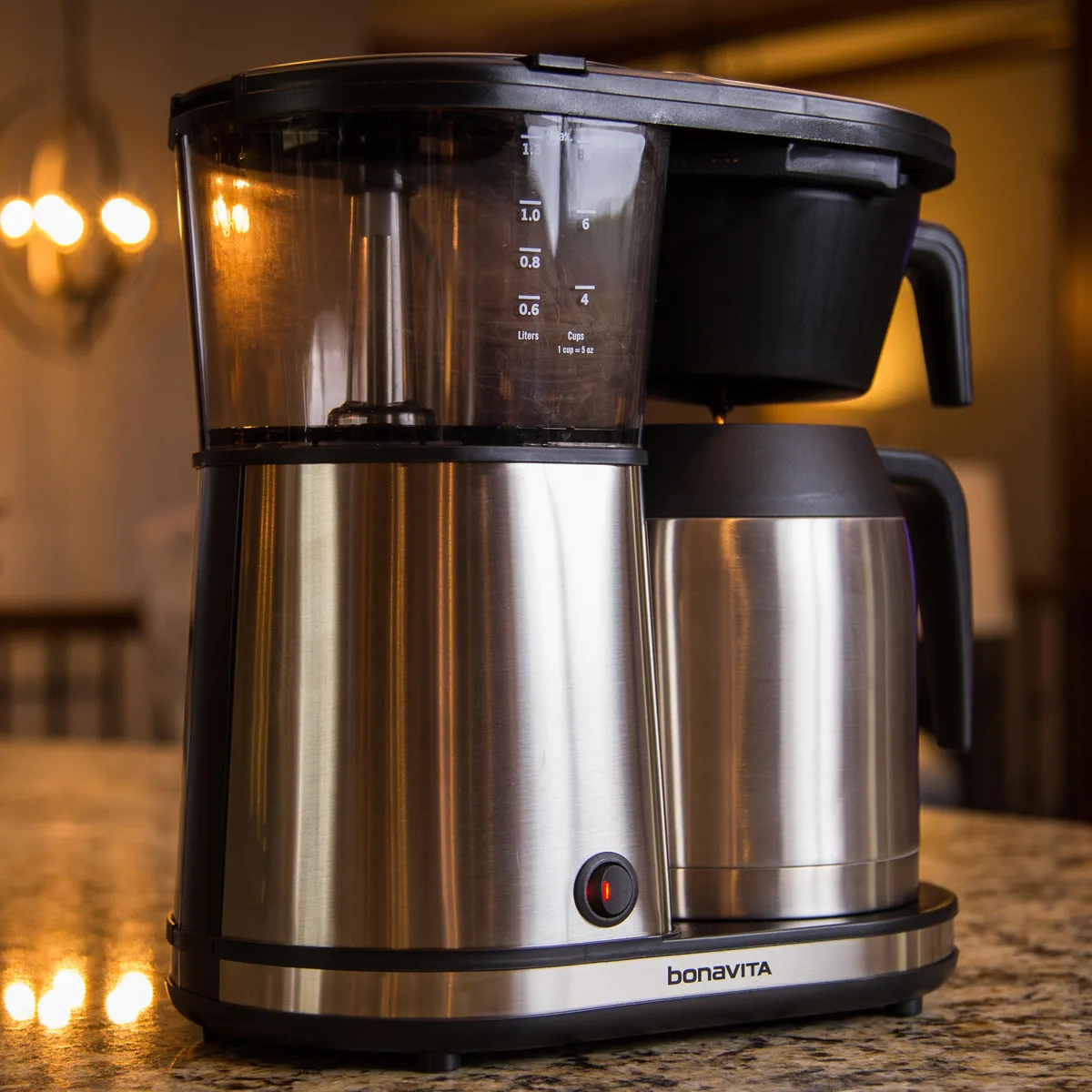
These are the unsung heroes of many diners, offices, and conference centers. They brew large volumes of coffee into thermal carafes or glass pots. They are simple, reliable, and fantastic for serving a crowd quickly. If your primary need is classic, no-fuss black coffee in high quantities, this is your starting point.
Commercial Espresso Machines (The Heart of the Cafe)
This is the big one. The showstopper. A commercial espresso machine is the cornerstone of any specialty coffee shop. They range from semi-automatic (where the barista controls the shot timing) to super-automatic (which does everything at the push of a button). These are complex, powerful machines designed for crafting lattes, cappuccinos, and perfect shots of espresso under constant pressure.
“Your espresso machine isn’t just a piece of equipment; it’s the engine of your bar’s workflow. Choosing the right one—one that matches your team’s skill level and your shop’s volume—is the most critical decision a new cafe owner will make.” – Maria Flores, veteran barista and cafe consultant.
Bean-to-Cup Machines (The All-in-One Solution)
Imagine a robot barista. That’s a bean-to-cup machine. It grinds the beans, tamps the grounds, pulls the shot, and steams the milk, all with a single button press. They offer incredible consistency and are perfect for environments where you don’t have a trained barista on staff, like corporate offices, hotel lobbies, or self-serve breakfast bars.
Pod and Capsule Systems (For Convenience and Control)
While some purists might scoff, commercial pod systems have their place. For a waiting room, a small office, or a hotel guest room, they offer unparalleled convenience, zero mess, and perfect portion control. The quality has improved immensely over the years, offering a decent cup with maximum ease of use.
Your Ultimate Checklist to Buy the Perfect Commercial Coffee Maker
Feeling a bit overwhelmed? Don’t be. We’ll walk through the decision-making process step-by-step. Grab a notepad and be honest about your needs.
1. How much coffee will you be making? (Volume & Capacity)
This is the most important question. Be realistic about your peak hours.
- Low Volume (Under 50 cups/day): A high-end home machine or a small “prosumer” model might suffice.
- Medium Volume (50-150 cups/day): Look at pour-over batch brewers or single-group espresso machines.
- High Volume (150+ cups/day): You’re in the territory of multi-group espresso machines and direct-plumbed batch brewers.
- Pro Tip: Always plan for growth. Buying a machine that’s slightly more capable than you need right now is smarter than outgrowing your machine in six months.
2. What’s your budget? (The Investment)
The price range is vast. A simple pour-over brewer might be a few hundred dollars, while a top-of-the-line, three-group espresso machine can easily run north of $20,000. Remember to factor in the total cost of ownership:
- Installation: Does it need special plumbing or electrical work?
- Ancillary Gear: You’ll need a high-quality commercial grinder, which is just as important as the coffee maker itself.
- Maintenance: Filters, cleaning supplies, and potential service calls add up.
3. Who will be using the machine? (Ease of Use)
Are your users trained baristas or the general office staff?
- Trained Staff: A semi-automatic espresso machine gives them the control they need to create artisanal drinks.
- Untrained Staff/Self-Serve: A super-automatic bean-to-cup or a pod system is your best bet for consistency and to avoid user error.
4. What kind of space do you have? (Footprint & Utilities)
Measure twice, buy once.
- Counter Space: Check the machine’s dimensions (width, depth, and height).
- Plumbing: Does the machine require a direct water line for continuous operation, or does it have a refillable reservoir? A direct line is essential for any high-volume setup.
- Power: Check the electrical requirements. Many powerful commercial machines require a 220V outlet, not the standard 110V.
|
Our Picks for the Best Coffee Maker in 2026
As an Amazon Associate, we earn from qualifying purchases.
|
||
| Num | Product | Action |
|---|---|---|
| 1 | BLACK+DECKER 12-Cup Digital Coffee Maker, Programmable, Washable Basket Filter, Sneak-A-Cup, Auto Brew, Water Window, Keep Hot Plate, Black |

|
| 2 | Amazon Basics Coffee Makers, 12-Cup Coffee Machines with Reusable Filter, Coffee Pots, Black & Stainless Steel |
|
| 3 | Mr. Coffee Black Coffee Maker, 12 Cups, with Auto Pause and Glass Carafe, Perfect for Home and Office Use |
|
| 4 | Keurig K-Express Single Serve K-Cup Pod Coffee Maker, 3 Brew Sizes, Strong Button Feature, 42oz Removable Reservoir, Black |
|
| 5 | Nespresso Vertuo Pop+ Coffee and Espresso Maker by De\'Longhi, Samra Origins by The Weeknd Vertuo Buna Yellow Aeroccino3 milk frother |
|
| 6 | Keurig K-Duo Hot & Iced Single Serve & Carafe Coffee Maker, MultiStream Technology, 72oz Reservoir (Gen 2) |
|
| 7 | BLACK+DECKER 12-Cup Digital Coffee Maker, Programmable, Washable Basket Filter, Sneak-A-Cup, Auto Brew, Water Window, Keep Hot Plate, Black |
|
| 8 | BLACK+DECKER 12-Cup Coffee Maker with Easy On/Off Switch, Easy Pour, Non-Drip Carafe with Removable Filter Basket, Vortex Technology, Black |
|
| 9 | BLACK+DECKER 12-Cup Coffee Maker with Easy On/Off Switch, Easy Pour, Non-Drip Carafe with Removable Filter Basket, Vortex Technology, Black |
|
| 10 | Mini Hot and Iced Coffee Maker Single Serve, for K Cup and Ground, 6 to 14 Oz Brew Sizes, with Recipe Book, for Home, Travel, RV, Office and Dorm, Classic Black (2.0 Version) |
|
Keeping Your Investment Running: Maintenance 101
You wouldn’t buy a new car and never change the oil. The same goes for your coffee machine. A consistent cleaning and maintenance schedule is non-negotiable for ensuring longevity and, more importantly, great-tasting coffee.
Your Basic Maintenance Checklist:
- Daily:
- Backflush the group heads (for espresso machines).
- Wipe down the steam wands immediately after each use.
- Clean portafilters and baskets.
- Empty and clean the drip tray and grounds drawer.
- Weekly:
- Deep clean group heads with a specialized detergent.
- Soak portafilters and baskets in a cleaning solution.
- Clean and descale carafes and brew baskets.
- Monthly/Quarterly:
- Check and replace water filters.
- Inspect gaskets and seals for wear and tear.
- Schedule a professional tune-up annually.
Pro Tips for Brewing Better Coffee Commercially
The machine is only part of the equation. To truly elevate your coffee game, remember these three golden rules:
- Great Coffee Starts with Great Water: Your coffee is 98% water. If your tap water tastes off, your coffee will too. Invest in a good water filtration system designed for coffee equipment.
- The Grinder is Your Co-Star: A cheap grinder will bottleneck the potential of even the most expensive machine. A quality commercial burr grinder that provides a consistent grind is a non-negotiable part of the package.
- Use Freshly Roasted Beans: Coffee is a fresh product. Partner with a local roaster or a quality supplier who can provide you with beans roasted within the last few weeks, not months.
Frequently Asked Questions
What is the main difference between a commercial and a home coffee maker?
The primary difference is durability and volume. Commercial machines are built with heavier-duty components to handle continuous use all day, every day, while home machines are designed for much lighter, intermittent use.
How much should I expect to spend when I buy a commercial coffee maker?
The range is huge. A simple batch brewer can cost $300-$1,000. A good quality one-group espresso machine might be $3,000-$7,000, while high-volume, multi-group machines can easily exceed $15,000 or more.
Do I need a direct water line for a commercial coffee maker?
For almost any true commercial setting, yes. A direct water line eliminates the need to constantly refill a water reservoir, which is impractical in a busy environment. It also ensures consistent water pressure for better extraction.
What does NSF certification mean and why is it important?
NSF certification means the machine has been tested and certified by a third party to meet specific standards for public health and safety. Most health departments require food service establishments to use NSF-certified equipment.
How long does a commercial coffee maker typically last?
With proper, consistent maintenance, a quality commercial coffee maker is a long-term investment that can last anywhere from 7 to 15 years, or even longer for high-end espresso machines. Neglect can cut that lifespan in half.
Your Next Steps in the Coffee Journey
Choosing to buy a commercial coffee maker is a significant step, but it’s an exciting one. It’s an investment in quality, efficiency, and the overall experience you provide for your customers or colleagues. By carefully assessing your needs for volume, budget, and usability, you can cut through the noise and find the perfect machine to be the heart of your operation. Now go on, explore the options, and get ready to brew some truly fantastic coffee. You’ve got this.