Let’s be real for a moment. That first scent of freshly brewed coffee in the morning is one of life’s simple, glorious pleasures. But what if that glorious aroma is preceded by a sound akin to a small tractor starting up in your kitchen? You’re not alone. Many of us are looking for ways on How To Reduce Coffee Maker Noise, and thankfully, you don’t have to sacrifice your peace and quiet for a great cup of joe.
That jarring gurgle, grind, or hiss can be a rough start to any day. But before you banish your beloved brewer to the garage, let’s dive in. I’m here to walk you through why your machine is making a racket and, more importantly, what you can do about it. We’ll turn your noisy nemesis into a silent partner in your morning ritual.
Why Is My Coffee Maker So Loud Anyway?
Understanding the “why” behind the noise is the first step to finding a solution. Different sounds often point to different culprits, and your type of machine plays a huge role.
The Common Culprits Across All Machines
- Vibration: This is a big one. The internal pump, grinder, or even just the water heating element can cause the entire machine to vibrate against your countertop. This is especially true for lightweight machines.
- Water Pump: The heart of most automatic coffee makers is a small pump that moves water from the reservoir to the heating element. These pumps, especially vibratory pumps in espresso machines, are inherently noisy.
- Mineral Buildup: If you live in a hard water area, this is likely your number one enemy. Limescale and mineral deposits can clog the internal tubing, forcing the pump and heating element to work overtime. This strain creates more noise—gurgling, hissing, and sputtering are classic signs.
Specific Noises by Machine Type
- Drip Coffee Makers: The classic “gurgle” at the end of the brew cycle is actually normal; it’s the sound of the last bits of water being forced through the system. However, excessive or constant gurgling points directly to a need for descaling.
- Espresso Machines: These are the orchestra conductors of the coffee world, with a whole section of potential noises. A loud humming or buzzing is the pump. A high-pitched screech can indicate a blockage. And of course, the grinder—if it has a built-in one—is going to make some noise.
- Pod Machines (Keurig, Nespresso): The loud “thump” or “punch” is the sound of the needle piercing the pod. The subsequent whirring is the small, powerful pump forcing hot water through that tiny space.
Actionable Steps on How to Reduce Coffee Maker Noise
Alright, now for the good stuff. Let’s get our hands dirty and bring some tranquility back to your kitchen. We’ll start with the easiest fixes and work our way up.
Start with the Basics: Simple Fixes for Any Machine
Before you start taking things apart, try these simple, often surprisingly effective, tricks.
- Place It on a Damping Mat: This is the single easiest fix for vibration noise. A simple rubber or silicone mat placed under your coffee maker can absorb a huge amount of the vibrations that would otherwise be amplified by your hard countertop. A folded dish towel can work in a pinch!
- Move It Away from Walls: If your machine is pushed right up against a wall or the backsplash, it can create an echo chamber. Pulling it forward just a few inches can make a noticeable difference.
- Ensure It’s on a Level Surface: A wobbly machine is a noisy machine. Make sure it’s sitting flat and stable.
Taming the Drip Coffee Maker: The Power of Descaling
If your trusty drip machine sounds like it’s gargling rocks, it’s begging to be descaled. This process removes mineral buildup and is crucial for both noise reduction and the taste of your coffee.
- Create Your Descaling Solution: You can buy a commercial descaling solution, but a simple 50/50 mix of white vinegar and water works wonders.
- Run a Half Cycle: Fill the water reservoir with the solution and run the coffee maker until it’s about halfway through the brew cycle.
- Let It Sit: Turn the machine off and let the hot vinegar solution sit in the machine’s innards for 30-60 minutes. This gives it time to break down those stubborn mineral deposits.
- Complete the Cycle: Turn the machine back on and let the rest of the solution run through.
- Rinse, Rinse, Rinse: This is key! Discard the vinegar solution and run 2-3 full cycles with fresh, clean water to flush out any remaining vinegar. You don’t want your next coffee to taste like a salad.
Pro Tip: Aim to descale your machine every 1-3 months, depending on your water hardness. It’s the best preventative maintenance you can do.
Silencing the Espresso Machine
Espresso machines are more complex, but the principles are similar. Regular cleaning and maintenance are your best friends.
- Clean the Group Head: Use a stiff brush to clean coffee grounds from the group head and screen daily. A clogged screen makes the pump work harder.
- Backflush Regularly: If your machine has a three-way solenoid valve (check your manual), backflushing with a blind basket is essential for keeping the internals clean.
- Consider the Grinder: The grinder is often the loudest part. If you have a separate grinder, you can move it further away or place it on a damping mat. If it’s built-in, ensure it’s clean and free of old, jammed beans.
When the Noise is a Cry for Help: Knowing When to Repair or Replace
Sometimes, a new or unusual noise is a sign of a bigger problem. A sudden, loud grinding or clanking could mean a component has failed. If the basic cleaning and damping tricks don’t work and the noise is getting worse, it might be time to call a professional or consider a replacement. Pouring money into an old, failing machine isn’t always the best investment.
Shopping for Silence: What to Look for in a Quiet Coffee Maker
If you’re in the market for a new machine, you can make quietness a priority. Knowing how to reduce coffee maker noise can start before you even buy it.
- SCA Certification: The Specialty Coffee Association (SCA) has rigorous standards for brew temperature and time, but their certified brewers are often higher-quality, better-insulated machines, which can translate to quieter operation.
- Grinder Type: For machines with built-in grinders, a belt-drive system is significantly quieter than a direct-drive system. Conical burr grinders also tend to be a bit quieter than flat burr grinders.
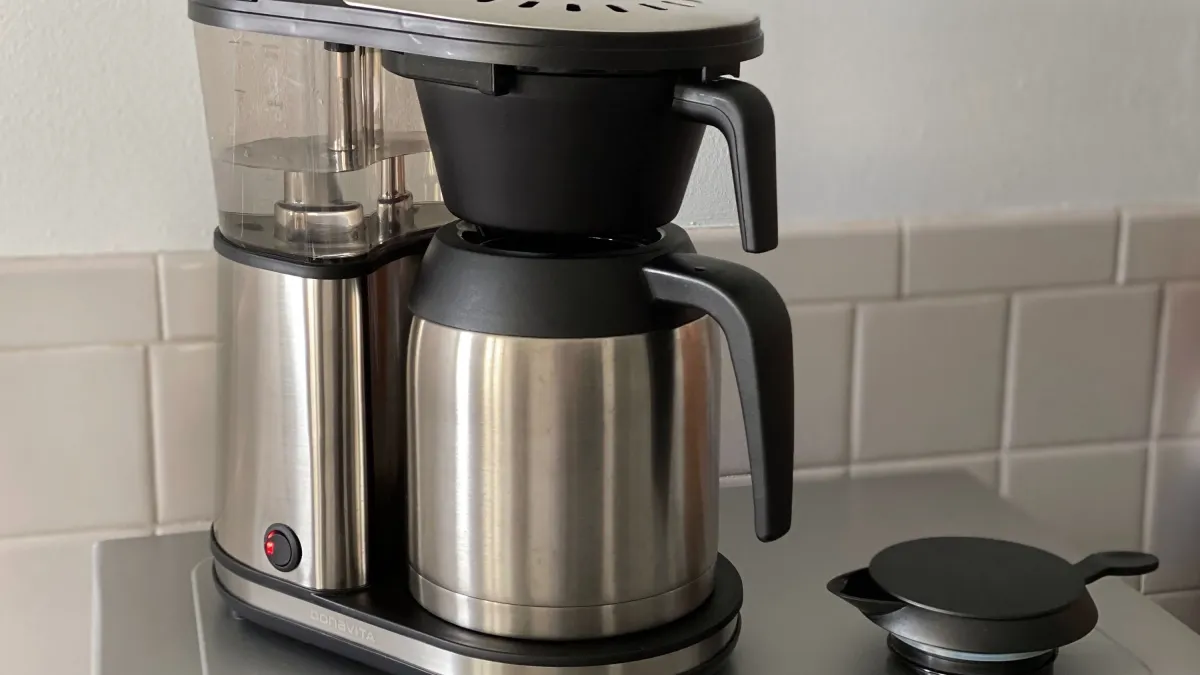
- Thermal Carafe vs. Glass: Machines with a thermal carafe don’t need a hot plate to keep the coffee warm. This eliminates the hissing and sizzling sound a hot plate can make as the last few drops of coffee evaporate.
- Read Reviews: This is invaluable. Look for reviews that specifically mention noise levels. Users are always quick to point out if a machine is surprisingly loud or pleasantly quiet.
|
Our Picks for the Best Coffee Maker in 2026
As an Amazon Associate, we earn from qualifying purchases.
|
||
| Num | Product | Action |
|---|---|---|
| 1 | Mr. Coffee Black Coffee Maker, 12 Cups, with Auto Pause and Glass Carafe, Perfect for Home and Office Use |

|
| 2 | Mini Hot and Iced Coffee Maker Single Serve, for K Cup and Ground, 6 to 14 Oz Brew Sizes, with Recipe Book, for Home, Travel, RV, Office and Dorm, Classic Black (2.0 Version) |
|
| 3 | Keurig K-Express Single Serve K-Cup Pod Coffee Maker, 3 Brew Sizes, Strong Button Feature, 42oz Removable Reservoir, Black |
|
| 4 | BLACK+DECKER 12-Cup Digital Coffee Maker, Programmable, Washable Basket Filter, Sneak-A-Cup, Auto Brew, Water Window, Keep Hot Plate, Black |
|
| 5 | BLACK+DECKER 12-Cup Coffee Maker with Easy On/Off Switch, Easy Pour, Non-Drip Carafe with Removable Filter Basket, Vortex Technology, Black |
|
| 6 | BLACK+DECKER 12-Cup Coffee Maker with Easy On/Off Switch, Easy Pour, Non-Drip Carafe with Removable Filter Basket, Vortex Technology, Black |
|
| 7 | BLACK+DECKER 12-Cup Digital Coffee Maker, Programmable, Washable Basket Filter, Sneak-A-Cup, Auto Brew, Water Window, Keep Hot Plate, Black |
|
| 8 | Nespresso Vertuo Pop+ Coffee and Espresso Maker by De\'Longhi, Samra Origins by The Weeknd Vertuo Buna Yellow Aeroccino3 milk frother |
|
| 9 | Amazon Basics Coffee Makers, 12-Cup Coffee Machines with Reusable Filter, Coffee Pots, Black & Stainless Steel |
|
| 10 | Keurig K-Duo Hot & Iced Single Serve & Carafe Coffee Maker, MultiStream Technology, 72oz Reservoir (Gen 2) |
|
According to David Chen, a veteran coffee equipment technician, “The biggest overlooked factor in coffee maker noise is the pump. Inexpensive machines use very basic, loud vibratory pumps. Look for brands that invest in better-insulated or higher-quality pump components if quiet is your top priority.”
Frequently Asked Questions (FAQ)
Q1: Can a dirty coffee maker really be louder?
A1: Absolutely. A dirty machine, especially one with limescale buildup, forces the pump and heating element to work much harder to move water. This strain directly results in more noise—gurgling, hissing, and louder pump operation.
Q2: Are espresso machines just naturally loud?
A2: They are generally louder than drip machines due to their high-pressure pumps and often, built-in grinders. However, a well-maintained, high-quality espresso machine should produce a consistent, powerful hum, not a rattling or screeching noise.
Q3: Will using filtered water help reduce coffee maker noise?
A3: Yes, it’s one of the best long-term strategies. Filtered or softened water contains far fewer minerals, which drastically slows the buildup of limescale. Less limescale means a cleaner, more efficient, and quieter machine over its lifespan.
Q4: My pod machine makes a loud noise when it starts. Is this normal?
A4: Yes, the initial loud “pop” or “thump” is typically normal for pod-style brewers. It’s the sound of the machine’s mechanism piercing the foil or plastic lid of the pod to allow hot water to flow through.
Q5: What’s the quietest type of coffee maker?
A5: Manual brewing methods are the quietest. A French press, pour-over, or AeroPress make virtually no noise besides the kettle boiling water. For automatic machines, high-end drip coffee makers with thermal carafes tend to be the quietest overall option.
Your Peaceful Morning Awaits
Learning how to reduce coffee maker noise is about more than just eliminating an annoyance. It’s about reclaiming the peaceful, sensory experience that a morning coffee ritual should be. From a simple rubber mat to a thorough descaling, you now have the tools to quiet your brewer.
So go ahead, give these tips a try. Listen to the gentle drip of your coffee, not the groan of your machine. Your ears—and anyone else sleeping in your home—will thank you for it. Enjoy the silence, and more importantly, enjoy your coffee.