Ever find yourself staring at a full 12-cup coffee pot, knowing you only need one perfect mug to kickstart your day? You’re not alone. The quest for the perfect solo caffeine fix is a common one, and mastering How To Brew Single Cup Coffee is a game-changer. It’s not just about avoiding waste; it’s about unlocking a world of freshness, control, and flavor that a full pot simply can’t offer. Forget that stale, day-old brew. We’re here to dive deep into making one glorious cup of coffee that’s brewed just for you, exactly when you want it. It’s a small daily ritual that can bring a surprising amount of joy, and I’m here to guide you through it.
Why Bother With a Single Cup Brewer?
Let’s be real for a second. In a world of convenience, why not just make a big pot and reheat it? The answer, my friend, is flavor. Coffee’s aromatic compounds are delicate and volatile. They start to degrade almost immediately after brewing. That reheated mug from a few hours ago? It’s a pale shadow of its former self.
Brewing a single cup at a time ensures:
- Peak Freshness: You’re enjoying the coffee at its absolute best, with all the complex notes and aromas intact.
- Zero Waste: You brew exactly what you need. It’s better for your wallet and the environment.
- Ultimate Customization: Feel like a bold, rich brew today and a bright, clean cup tomorrow? Single-cup methods let you experiment with different beans, grind sizes, and techniques on a daily basis.
- A Mindful Moment: The process of brewing one cup can be a meditative, rewarding ritual that sets a positive tone for your day. It’s your five-minute escape.
The Contenders: Popular Ways to Brew a Single Serving
Navigating the world of single-cup coffee can feel a bit overwhelming at first. You’ve got gadgets of all shapes and sizes. But don’t worry, it really boils down to a few key players. Think of me as your guide on this flavor safari.
The Pour-Over: For the Coffee Ritualist
This is the method you’ve likely seen in third-wave coffee shops. It involves manually pouring hot water over a bed of coffee grounds in a filter-lined dripper. It’s a hands-on method that gives you complete control over the brewing process.
- Popular Devices: Hario V60, Kalita Wave, Chemex (smaller 3-cup version).
- Flavor Profile: Exceptionally clean, bright, and nuanced. It highlights the delicate, acidic, and floral notes in a coffee.
- Best For: Someone who enjoys the process of making coffee and wants to taste the subtle differences between single-origin beans.
The AeroPress: For the Versatile Adventurer
The AeroPress is a cult favorite, and for good reason. It’s a marvel of plastic engineering that looks a bit like a science experiment. It uses air pressure to plunge coffee through a filter, resulting in a fast, low-acidity brew.
- Flavor Profile: Rich and smooth, with a full body but very little bitterness. It can make everything from a concentrated, espresso-style shot to a clean, drip-style cup.
- Best For: Travelers, experimenters, and anyone who wants a fantastic, versatile cup in under two minutes. It’s incredibly forgiving.
The French Press: For the Full-Bodied Fan
A true classic. The French press is an immersion brewer, meaning the coffee grounds steep directly in the water before being separated by a mesh plunger.
- Flavor Profile: Bold, rich, and full-bodied with a heavy mouthfeel. Because it uses a metal filter, more of the coffee’s natural oils make it into the cup.
- Best For: Those who love a robust, traditional cup of coffee and aren’t bothered by a little sediment at the bottom of their mug. You can easily find small, single-serving French presses.
The Pod Machine: For the Convenience King
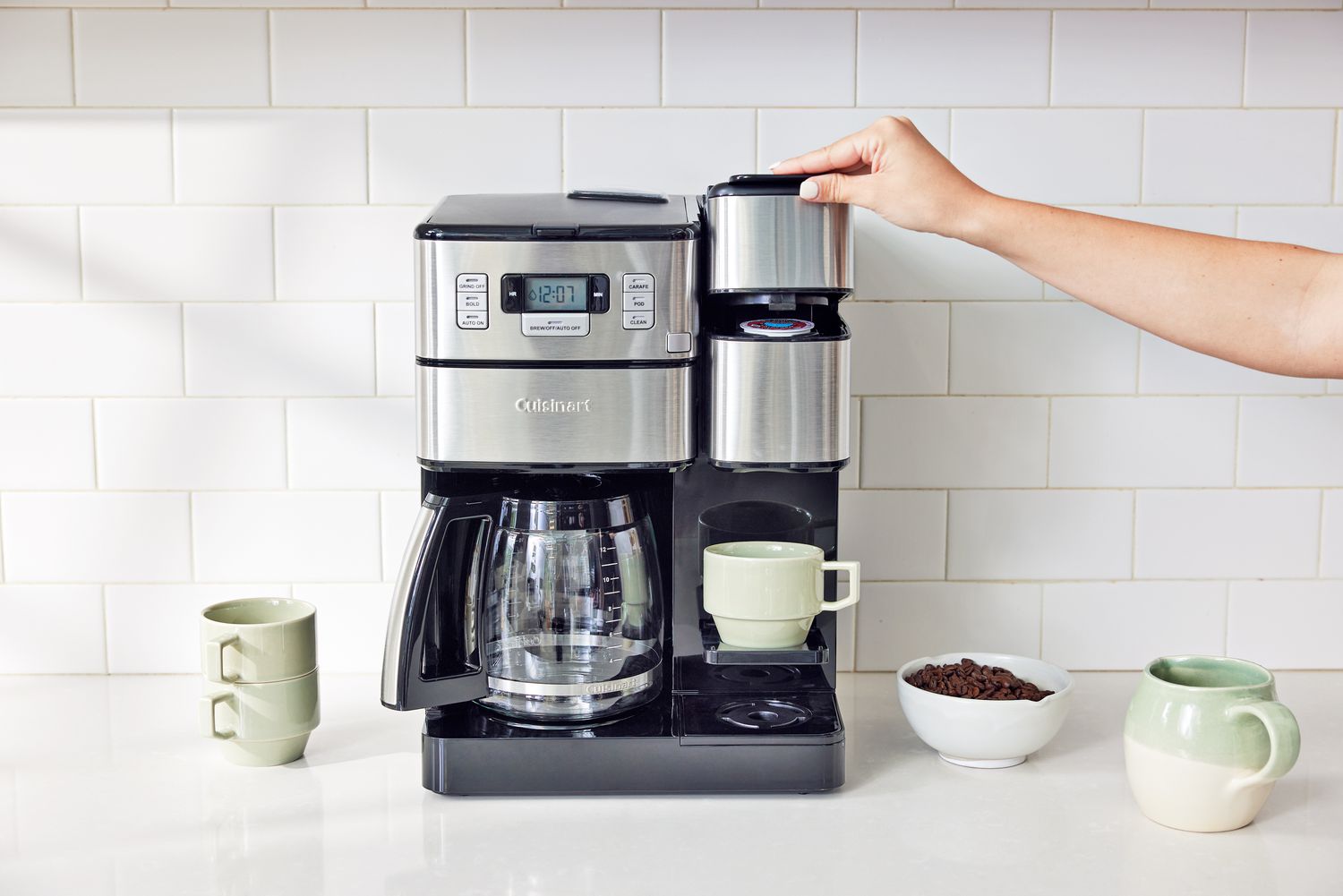
We have to talk about them. Machines like Keurig or Nespresso offer the ultimate “press-a-button” convenience. You pop in a pre-packaged pod, and you have coffee in about a minute.
- Flavor Profile: Varies wildly by pod, but generally tends to be consistent and straightforward. It often lacks the complexity of manually brewed coffee.
- Best For: Busy professionals, offices, or anyone whose top priority is speed and zero cleanup. The trade-off is in flavor potential, cost per cup, and environmental impact.
How to Brew Single Cup Coffee: Finding Your Perfect Match
So, how do you choose? It’s less about which method is “best” and more about which method is best for you. Let’s break it down by asking a few simple questions.
What’s Your Coffee Style?
Are you chasing the delicate, tea-like notes of an Ethiopian Yirgacheffe, or do you crave the bold, chocolatey punch of a dark-roasted Sumatra?
- For Clarity & Nuance: The Pour-Over is your champion. Its paper filter traps oils and fine particles, leading to a crystal-clear cup.
- For Richness & Body: The French Press is your go-to. It lets those oils and fine particles through, creating a heavy, satisfying brew.
- For a Clean & Concentrated Shot: The AeroPress excels here. It produces a smooth, low-acidity cup that can be diluted to your liking.
How Much Time Do You Really Have in the Morning?
Be honest with yourself. Are you a “snooze button” person or a “wake up and smell the coffee” person?
- Under 2 Minutes: A Pod Machine is the undisputed speed demon. The AeroPress is a close second, with a total brew and cleanup time of around two minutes.
- 3-5 Minutes: The Pour-Over method fits perfectly here. It’s a quick but engaging ritual.
- 5+ Minutes: The French Press requires about four minutes of steeping time, plus prep and cleanup, putting it in this category.
What’s Your Budget for Gear?
You can get into the single-cup game at almost any price point.
- Most Affordable: A simple plastic Pour-Over Dripper (like a V60) or a small French Press can be had for under $20.
- Mid-Range: The AeroPress is a fantastic value, usually costing around $30-$40 for the entire kit.
- Investment: Pod Machines have a higher upfront cost, and the ongoing cost of pods is significantly more expensive per cup than buying whole beans.
Expert Take: Isabella Rossi, a certified Q Grader and coffee consultant, often says, “The best coffee maker is the one you’ll actually use every day. Don’t buy a complex pour-over set if you know you only have three minutes in the morning. An AeroPress or a small French press will serve you far better and bring you more joy.”
|
Our Picks for the Best Coffee Maker in 2026
As an Amazon Associate, we earn from qualifying purchases.
|
||
| Num | Product | Action |
|---|---|---|
| 1 | Mini Hot and Iced Coffee Maker Single Serve, for K Cup and Ground, 6 to 14 Oz Brew Sizes, with Recipe Book, for Home, Travel, RV, Office and Dorm, Classic Black (2.0 Version) |

|
| 2 | Nespresso Vertuo Pop+ Coffee and Espresso Maker by De\'Longhi, Samra Origins by The Weeknd Vertuo Buna Yellow Aeroccino3 milk frother |
|
| 3 | Amazon Basics Coffee Makers, 12-Cup Coffee Machines with Reusable Filter, Coffee Pots, Black & Stainless Steel |
|
| 4 | BLACK+DECKER 12-Cup Digital Coffee Maker, Programmable, Washable Basket Filter, Sneak-A-Cup, Auto Brew, Water Window, Keep Hot Plate, Black |
|
| 5 | Keurig K-Express Single Serve K-Cup Pod Coffee Maker, 3 Brew Sizes, Strong Button Feature, 42oz Removable Reservoir, Black |
|
| 6 | BLACK+DECKER 12-Cup Coffee Maker with Easy On/Off Switch, Easy Pour, Non-Drip Carafe with Removable Filter Basket, Vortex Technology, Black |
|
| 7 | Keurig K-Duo Hot & Iced Single Serve & Carafe Coffee Maker, MultiStream Technology, 72oz Reservoir (Gen 2) |
|
| 8 | BLACK+DECKER 12-Cup Coffee Maker with Easy On/Off Switch, Easy Pour, Non-Drip Carafe with Removable Filter Basket, Vortex Technology, Black |
|
| 9 | BLACK+DECKER 12-Cup Digital Coffee Maker, Programmable, Washable Basket Filter, Sneak-A-Cup, Auto Brew, Water Window, Keep Hot Plate, Black |
|
| 10 | Mr. Coffee Black Coffee Maker, 12 Cups, with Auto Pause and Glass Carafe, Perfect for Home and Office Use |
|
Pro Tips for a Better Single Cup, Every Time
Once you’ve chosen your weapon, a few universal truths will elevate your brew from “good” to “unforgettable.” I’ve spent years dialing in these details, and they make all the difference.
- Start with Great Beans: This is non-negotiable. Your coffee will only ever be as good as the beans you start with. Buy freshly roasted whole beans from a local roaster if you can. Look for a “roasted on” date, not a “best by” date. [Find out how to choose the best coffee beans for your brew].
- Grind Right Before You Brew: Coffee begins to go stale within 15 minutes of being ground. A quality burr grinder is the single best investment you can make for your coffee game. It provides a consistent grind, which is crucial for even extraction.
- Use Good Water: Your coffee is over 98% water, so if your tap water tastes bad, your coffee will too. Use filtered water for a clean, pure taste.
- Get the Temperature Right: The ideal water temperature for brewing is between 195-205°F (90-96°C). Too hot, and you’ll scorch the coffee. Too cold, and it will be under-extracted and sour. A variable temperature kettle is a fantastic tool for this.
- Use a Scale: Want consistency? Ditch the scoops. Measuring your coffee and water by weight using a simple digital kitchen scale is the only way to ensure you’re using the right ratio every single time. A common starting point is a 1:16 ratio (1 gram of coffee for every 16 grams of water).
Frequently Asked Questions (FAQ)
Q1: What is the easiest way to brew a single cup of coffee?
The easiest method is undoubtedly a pod machine like a Keurig or Nespresso, as it requires minimal effort and cleanup. For a manual method, the French press is very straightforward, requiring you to simply add coffee and water, wait, and press.
Q2: Is it cheaper to brew single cup coffee?
It can be. While the initial gear might be an investment, brewing with whole beans is significantly cheaper per cup than using pods or buying coffee from a cafe. You also eliminate waste by only brewing what you’ll drink.
Q3: Can I use pre-ground coffee for single-cup brewing?
You certainly can, and it’s a convenient option. However, for the best possible flavor, we always recommend grinding your beans just before brewing. Pre-ground coffee loses its freshness and aromatic complexity much faster than whole beans.
Q4: Do I need a special gooseneck kettle for pour-over?
While not strictly necessary, a gooseneck kettle gives you much greater control over the speed and placement of your water pour. This control is key to achieving an even extraction and a delicious cup, making it a highly recommended tool for any serious pour-over enthusiast.
Q5: How do I clean my single-cup brewer?
Most single-cup brewers are very easy to clean. An AeroPress can be cleaned in seconds by simply plunging the “puck” of grounds into the trash. Pour-over drippers just require you to toss the filter. A French press needs to be rinsed thoroughly to remove all grounds.
Your Perfect Cup Awaits
Learning how to brew single cup coffee is more than just a skill; it’s an invitation to elevate a simple daily routine into a moment of genuine pleasure. It’s about taking control, reducing waste, and treating yourself to the incredible flavors that fresh, well-prepared coffee has to offer. Whether you become a pour-over purist, an AeroPress aficionado, or a French press devotee, the journey of finding your perfect method is a delicious one. So go on, explore, and enjoy the simple luxury of a coffee brewed just for you.